

Key Takeaways
- Myopia means clear near vision but blurry distance vision, and it often grows worse as a child’s eyes grow.
- Myopia control lenses, orthokeratology (ortho-k), and low-dose atropine can help slow how fast myopia progresses.
- Axial length measurement is just as important as tracking prescription changes because it helps your eye doctor monitor eye growth and determine whether the myopia control plan is working.
- Following your eye doctor’s directions, more outdoor time, and the 20-20-20 rule support your child’s vision.
Your child sits closer to the TV each month, or squints to read the classroom board. You want to help, and the good news is you have real options. Port Moody Eye Care Centre can check your child’s eyes and explain myopia control in plain terms.
Myopia control spectacles or soft contact lenses and low-dose atropine drops can help slow how quickly your child’s nearsightedness progresses. On-site axial length measurement helps your eye doctor track how your child’s eyes are growing and determine whether the myopia control approach is working effectively, so the plan can be adjusted or additional treatment considered when needed.
What Is Myopia?
Your child can read a book on their lap but squints at the classroom board. That gap points to myopia, also called nearsightedness. Near objects typically look clear while distant ones turn fuzzy.
Myopia happens when the eye grows a little too long from front to back. Light then lands in front of the retina instead of on it. Genetics play a role, and so do long hours on screens and less time playing outside.
Signs to Watch for in Kids
Children rarely say their vision is blurry. They just adapt. A few habits can hint that things have shifted, including:
- Squinting at the board, the TV, or road signs
- Sitting very close to screens or holding books near the face
- Headaches or tired eyes after schoolwork
Why Slower Myopia Progression Matters for Your Child
Fast myopia progression usually means a new, stronger prescription every year. Slowing that pace can mean fewer changes and steadier vision.
Steady vision helps your child follow lessons, catch a ball, and read a scoreboard without a fresh set of glasses each term. A lower prescription also lowers the chance of eye problems later in life, since high myopia carries more risk to the retina as your child grows.
Types of Myopia Control
There isn’t one right choice for every child. Your eye doctor can discuss the different approaches to myopia control and recommend an option based on your child’s age, prescription, eye growth, and daily routine.
At Port Moody Eye Care Centre, soft myopia control contact lenses are available for children who may prefer contact lenses over glasses.
Glasses and Soft Contact Lenses
Myopia control glasses have a clear centre zone for sharp vision, surrounded by tiny lenslets that gently signal the eye to slow its growth. They look and feel much like regular glasses.
Older kids who play sports or feel self-conscious in glasses may prefer soft myopia control contact lenses designed to help slow myopia progression.
Overnight Orthokeratology (Ortho-K) Lenses
Ortho-k lenses are worn during sleep. They gently reshape the front surface of the eye, called the cornea, overnight. Your child removes them in the morning and can see clearly through the day without glasses or daytime contacts.
Low-Dose Atropine Drops
Low-dose atropine is a nightly eye drop used alongside glasses or contacts. A small amount at bedtime can help slow eye growth while your child still wears their usual vision correction during the day.
How We Help
A myopia control plan works best when your eye doctor can measure real change over time, not just guess from a blurry chart.
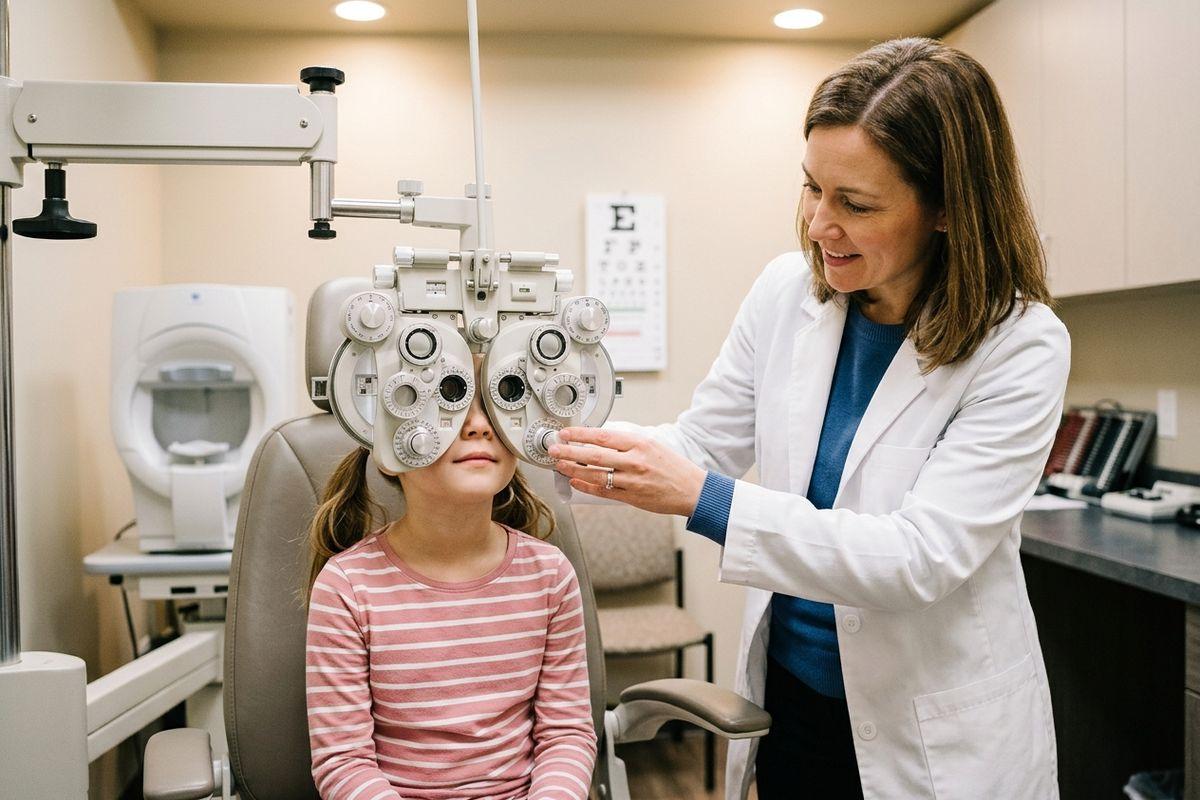
On-site axial length measurement tracks the length of the eye down to fine detail. Measuring axial length is just as important as measuring your child’s prescription when monitoring myopia progression because it shows how the eye itself is growing. Tracking axial length over time helps your eye doctor determine whether the current myopia control approach is working effectively and whether the plan needs to be adjusted or another treatment option added. Modern diagnostic tools can give more accurate readings, and regular checkups help your doctor adjust the approach as your child grows.
Why Consistent Daily Wear Matters
Myopia control lenses and drops only help while your child uses them as prescribed. Think of it like a daily medicine. Skipping days weakens the effect. A simple routine, on with breakfast and off at bedtime, helps your child get the full benefit.
Healthy Habits to Support Your Child’s Vision
Small daily choices add up alongside any treatment. Try to:
- Aim for more outdoor time in natural light, since daylight appears to slow myopia growth.
- Follow the 20-20-20 rule, where every 20 minutes of near work your child looks at something 20 feet away for 20 seconds.
- Start myopia control early, often between ages 6 and 12, when eyes change the fastest.
Prioritize Their Vision
You know your child better than anyone, and catching myopia early can give you more options. Our team at Port Moody Eye Care Centre can check your child’s vision, measure their eye growth, and build a plan that fits your family. Book an eye exam at either location today.