

Key Takeaways
- Digital eye strain can show up as headaches, blurry vision, and sore neck muscles after long screen time.
- A small misalignment between your eyes can make close-up work feel harder than it should.
- Neurolens uses a contoured prism to bring your eyes into gentler alignment at near, middle, and far distances.
- Measurement starts with a full eye exam, then a device that checks how your eyes work together.
- Simple habits like the 20-20-20 rule can add daily comfort alongside the right lenses.
Long days in front of a screen can leave your eyes tired, your head aching, and your neck sore. If that sounds familiar, small vision issues could be part of the picture. Our team at Port Moody Eye Care Centre often hears from patients who feel worn out after screen-heavy days.
Neurolens can help relieve digital eye strain by using a contoured prism that brings your eyes into gentler alignment, so your eye muscles do less work during close-up and screen tasks. A short Neurolens measurement can show whether it fits your needs.
What Digital Eye Strain Feels Like
You spend hours looking at screens for work, school, and everything in between. By the afternoon, your eyes feel tired and heavy, and reading that next email takes more effort than it should.
This kind of tiredness is common now. Phones, laptops, and tablets keep your eyes locked on close-up tasks for long stretches, and the discomfort tends to build as the day goes on.
Common Signs to Watch For
The signs often show up in more than one way, including:
- Headaches that creep in during or after screen time
- Blurry vision when you shift your focus
- Neck and shoulder tension
- Sore, dry, or tired eyes
Why Screen Time Bothers Your Eyes
Your eyes shift focus constantly, moving from a screen to a notepad to a person across the room. Each shift asks your eye muscles to adjust, and that adds up over a long day.
For many people, the two eyes may not line up quite perfectly. That small gap means your eyes put in extra effort to keep everything looking clear and steady.
How Misalignment Adds Strain
When your eyes sit slightly out of line, your brain works harder to blend the two images into one. During close-up tasks, that extra work keeps building, which can leave you with headaches and tired eyes by the end of the day.
How Neurolens Works to Ease Strain
Neurolens lenses use a contoured prism, a lens design that gently guides your eyes into better alignment. Instead of your eye muscles doing all the work, the lens helps share the load.
The alignment support works across distances, so it can help whether you’re reading a book, watching a screen an arm’s length away, or looking across the room.
The Measurement Step
Getting fitted follows a clear path:
- You start with a comprehensive eye exam so your optometrist can check your overall eye health and prescription.
- A Neurolens device measures how well your eyes work together at different distances.
- Custom lenses are made to match your own measurements.
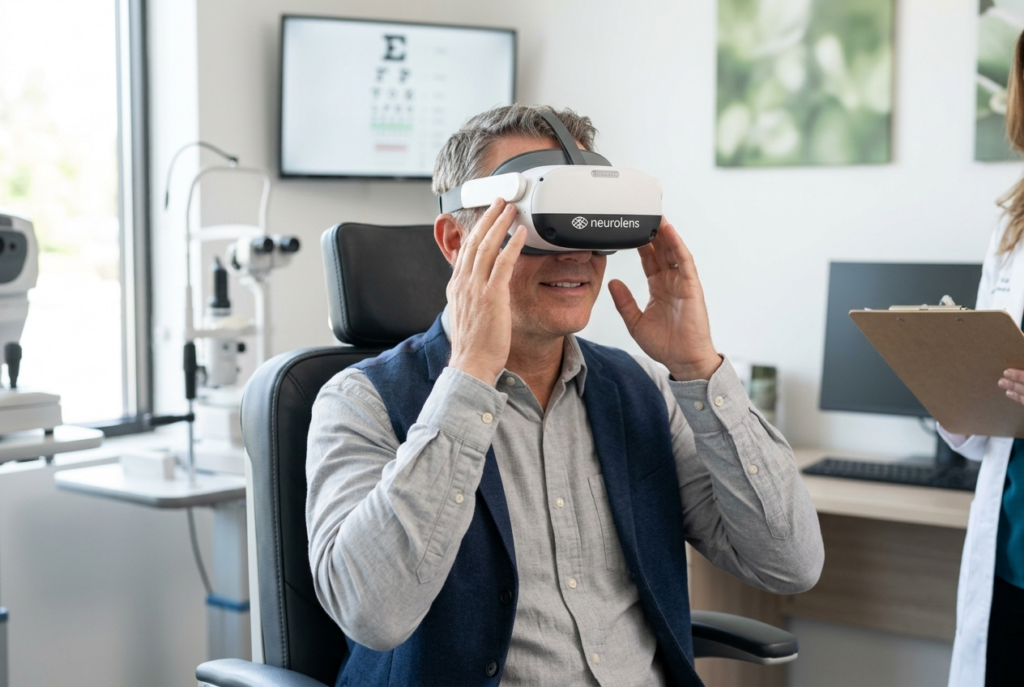
How Neurolens Compares to Standard Glasses
Standard lenses correct your focus. They help you see sharply, and for many people that’s all they need.
Neurolens takes a different aim. It targets discomfort from eye misalignment, so it works alongside your focus correction rather than replacing it.
If reading and screen time leave you achy, this added support can help make those hours feel easier on your eyes and head.
Who Can Benefit and Simple Screen Habits
Not everyone needs Neurolens, but some people tend to find real relief with it, including:
- Office workers who stare at screens most of the day
- Students and gamers with long hours of close-up focus
- Adults who experience frequent headaches or migraine symptoms that may be triggered or worsened by visual tasks
If screen time seems to bring on headaches or make migraine symptoms feel worse, it may be worth having your eye alignment evaluated. Neurolens may provide added support for people whose visual system is working harder during prolonged near tasks.
The 20-20-20 Rule for Daily Comfort
A short habit can give your eyes regular breaks throughout the day:
- Every 20 minutes, pause what you’re doing.
- Look at something about 20 feet away.
- Rest your eyes there for 20 seconds.
This small routine gives your focusing muscles a chance to relax, which can ease that tired feeling before it builds.
We Can Help
If long screen days leave your eyes and head aching, our team at Port Moody Eye Care Centre can check how your eyes work together and talk through whether Neurolens fits your needs. Book an eye exam at either location to get started.