
Key Takeaways
- Nearsightedness, or myopia, makes far objects look blurry while close ones typically stay clear.
- Family history, long hours of close-up work, and less outdoor time can raise the risk.
- Signs in kids include squinting, sitting close to screens, or struggling to read the classroom board.
- An eye exam with tools like OCT can confirm myopia and track changes over time.
- Outdoor time, screen breaks, and myopia control options can help slow the progress in growing kids.
You can read a text message with no trouble, but the street sign down the block looks fuzzy. That mismatch has a name, and our team at Port Moody Eye Care Centre helps families sort it out. It’s called nearsightedness, and the medical term is myopia.
Nearsightedness happens when your eye focuses light in front of the retina instead of directly on it, leaving faraway objects blurry while close ones typically stay sharp.
What Nearsightedness Means for Your Vision
The retina is the light-sensing layer at the back of your eye. When the eye grows a little too long, light lands short of that layer. Close work feels easy, but distance turns soft and unclear.
Common Risk Factors for Myopia
Myopia usually develops from a mix of factors, not a single reason. Here’s what tends to play a part.
Family History and Eye Shape
Myopia often runs in families. If one or both parents are nearsighted, a child has a higher chance of it too.
A lot of it comes down to shape. When the eye grows too long or takes on an oval form, light can’t land where it should.
Screen Time and Close-Up Work
Long hours on phones and tablets keep the eyes locked on something close. Reading, homework, and gaming do the same when they stretch on for hours without a break. That steady close focus can add strain, especially for growing eyes.
Time Spent Outdoors
Kids who spend less time outside tend to face a higher risk of myopia. Fresh air and natural light give growing eyes a chance to focus on distance. Outdoor play seems to support healthy eye growth in a way screen time can’t match.
Signs to Watch for in Kids and Adults
Myopia can creep in slowly, so the early clues matter. Here’s what to keep an eye on.
What Parents Might Notice in Children
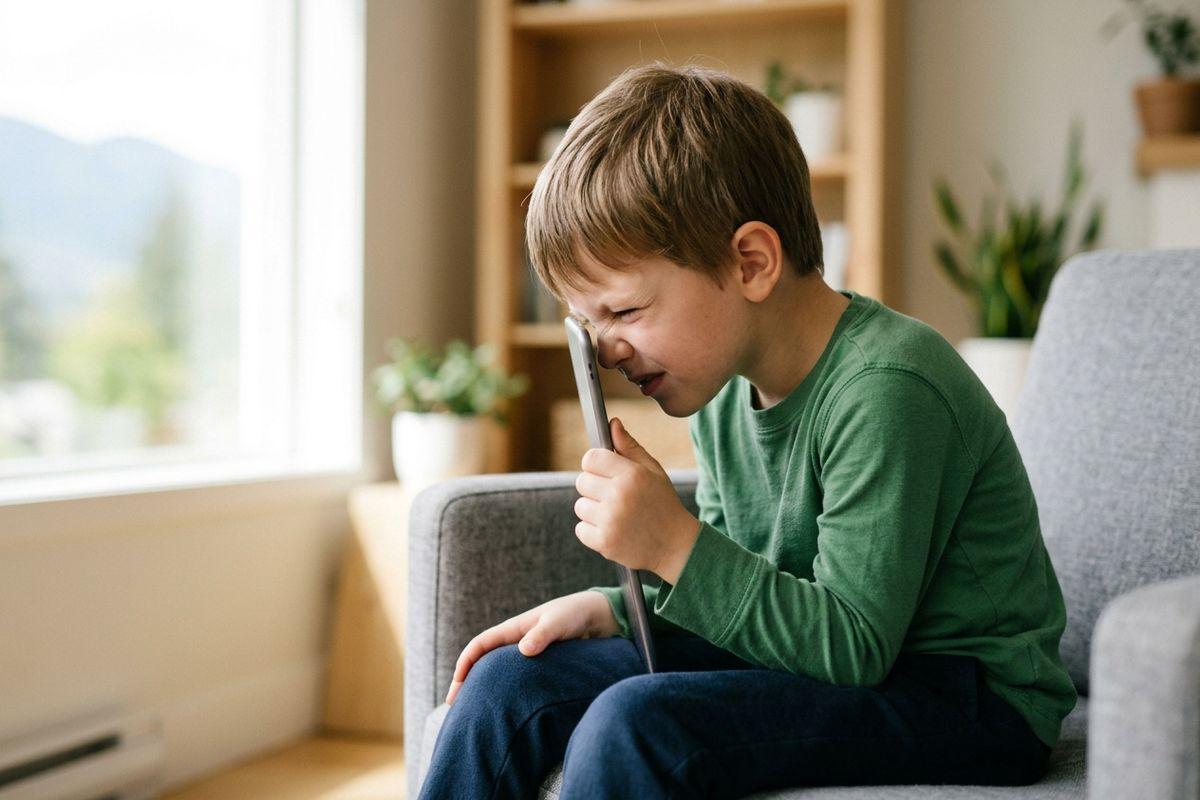
Young kids rarely say their vision is blurry. They just adapt, so you may spot the signs before they do:
- Squinting, extra blinking, or sitting very close to the TV or a tablet.
- Trouble reading the classroom whiteboard or copying notes.
- Frequent eye rubbing, even when they aren’t tired.
What Adults Might Notice
For adults, the shift often shows up on the road. Watch for these:
- Blurry road signs and harder night driving.
- Headaches and tired, achy eyes after a long day.
How Eye Exams Find and Track Nearsightedness
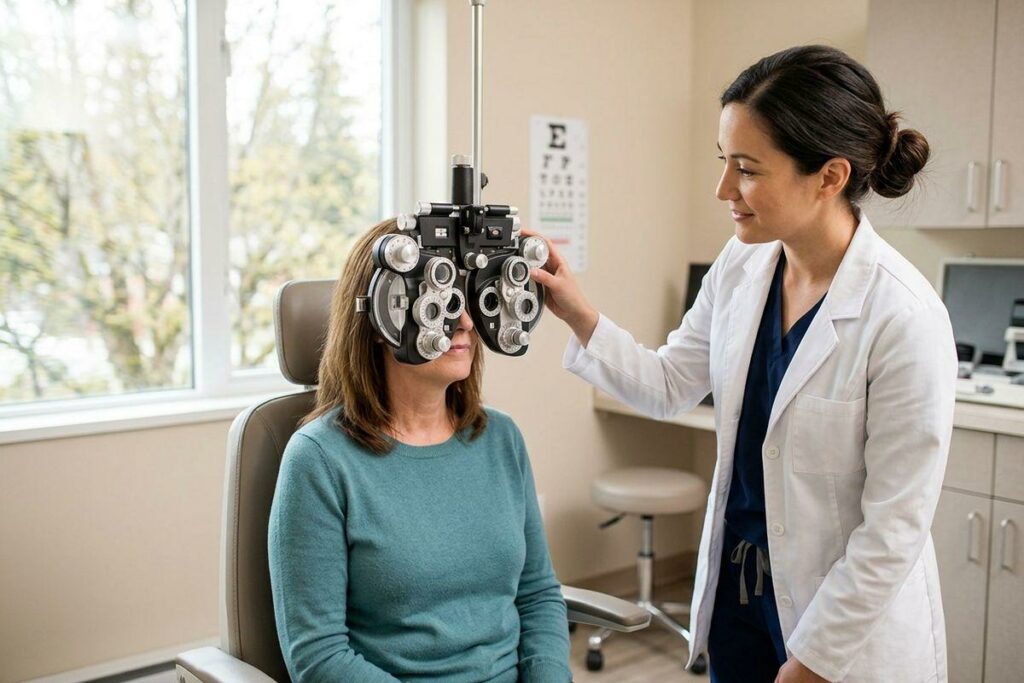
A checkup with an optometrist can quickly confirm myopia. The exam is calm and straightforward, with no discomfort for kids or adults.
Modern tools add a fuller picture. The Spectralis OCT, a scanner that maps the layers at the back of your eye, helps our team check the retina and watch for changes in detail. This kind of imaging can pick up small shifts long before you’d notice them yourself.
For children with myopia, we also track axial length, or the distance from the front to the back of the eye. Measuring axial length over time gives our team another way to monitor how quickly a child’s eyes are growing and whether their myopia may be progressing. This information can help guide conversations about myopia management and whether a child’s treatment plan needs to be adjusted.
Regular visits also matter. When our team tracks your eyes over time, we can catch changes early and adjust your prescription or plan before things drift too far.
Ways to Slow Nearsightedness
You can’t change your family history, but a few habits and options can help manage myopia and keep your vision comfortable.
Everyday Habits That Help
More outdoor time each day is one of the simplest steps for kids. Aim to swap some screen minutes for time in the fresh air.
Screen breaks help too. Look at something far away for a few moments after close work, and let the eyes rest before starting again.
Myopia Control Options
Glasses and contact lenses can correct blurry distance vision so road signs and whiteboards come back into focus. For growing kids, myopia control uses special lenses or contacts to help slow the progression of nearsightedness.
The right choice depends on age, lifestyle, and how the eyes are changing. A quick chat during an exam can help you sort out what fits.
We Can Help
If you’ve noticed blurry distance vision in yourself or your child, it’s a good time to book an appointment. Port Moody Eye Care Centre welcomes families across Port Moody and the Tri-Cities at both locations. Reach out today to schedule an exam and give your eyes the attention they deserve.