

Key Takeaways
- A gritty feeling often means your eyes are dry, irritated, or missing a smooth layer of tears.
- Common reasons include dry eye, inflamed eyelids, and sun or allergy exposure.
- One gritty eye can point to a scratch, a stye, or uneven tear coverage.
- Warm compresses, artificial tears, and screen breaks can bring relief at home.
- Grittiness lasting more than a few days, pain, or vision changes calls for an eye exam.
You know the feeling. It’s like a grain of sand landed in your eye, even though nothing is there. Your eyes feel scratchy and rough, and blinking doesn’t seem to help.
That sensation often comes with watering, redness, or a burning sting. Your eyes may water more as they try to soothe the irritation.
A gritty feeling usually means the smooth layer of tears across your eye has broken down, leaving the surface dry, irritated, or inflamed.
That’s where our team at Port Moody Eye Care Centre can help, since many reasons behind it become manageable once you know the cause.
Common Causes Behind Gritty Eyes
Dry Eye
Dry eye happens when your eyes don’t make enough tears, or the tears they make dry up too fast. Long hours at a screen, aging, and certain medications can all play a role.
When you stare at a screen, you blink less. Fewer blinks mean less moisture spread across your eyes, and that grainy feeling creeps in by mid-afternoon. Screen habits are a big part of digital eye strain.
Blepharitis and Blocked Oil Glands
Tiny glands along your eyelids release oil that keeps your tears from drying too quickly. When those glands clog, or your lids become inflamed, a condition called blepharitis, your eyes may feel gritty and sore.
You might also notice crusty lashes in the morning, redness, or swollen lid edges.
Sun Exposure and Other Irritants
Spend a long day outdoors without sunglasses, and UV rays can leave the surface of your eyes feeling sunburned. The result is a raw, gritty ache hours later.
Pink eye, styes, and seasonal allergies can bring the same scratchy feeling, often with extra tearing or puffiness.
Why One Eye Feels Gritty but Not the Other
Sometimes only one eye bothers you. That can point to a small scratch or a bit of dust or an eyelash caught under the lid.
A stye, which is a tender bump along the lash line, can also make a single eye feel rough and swollen.
Uneven tear coverage is another reason. One eye may drain tears faster or hold less moisture, so it dries out while the other stays comfortable.
If one eye stays gritty for more than a day, it’s worth having it looked at.
How to Find Relief for Gritty Eyes
Simple Steps at Home
Start with artificial tears, which are lubricating drops you can buy without a prescription. A few drops can smooth the surface and calm the scratchiness.
A warm compress held over closed lids for a few minutes helps loosen clogged oil glands. Follow it with gentle lid cleaning to clear away crust and buildup.
Small changes help too. Take a break from your screen every 20 minutes, run a humidifier in dry rooms, and wear sunglasses whenever you head outside.
In-Office Care Options
When home care isn’t enough, dry eye therapy can go further. LipiFlow is a treatment that warms and gently clears blocked oil glands along your lids.
Our team can also perform deeper eyelid cleaning treatments to reduce inflammation from blepharitis. When an infection or ongoing irritation is involved, an optometrist may prescribe medicated drops to help settle it.
When to Book an Eye Exam
Grittiness that hangs around for more than a few days deserves a closer look. So does any eye that feels painful, sensitive to light, or blurry.
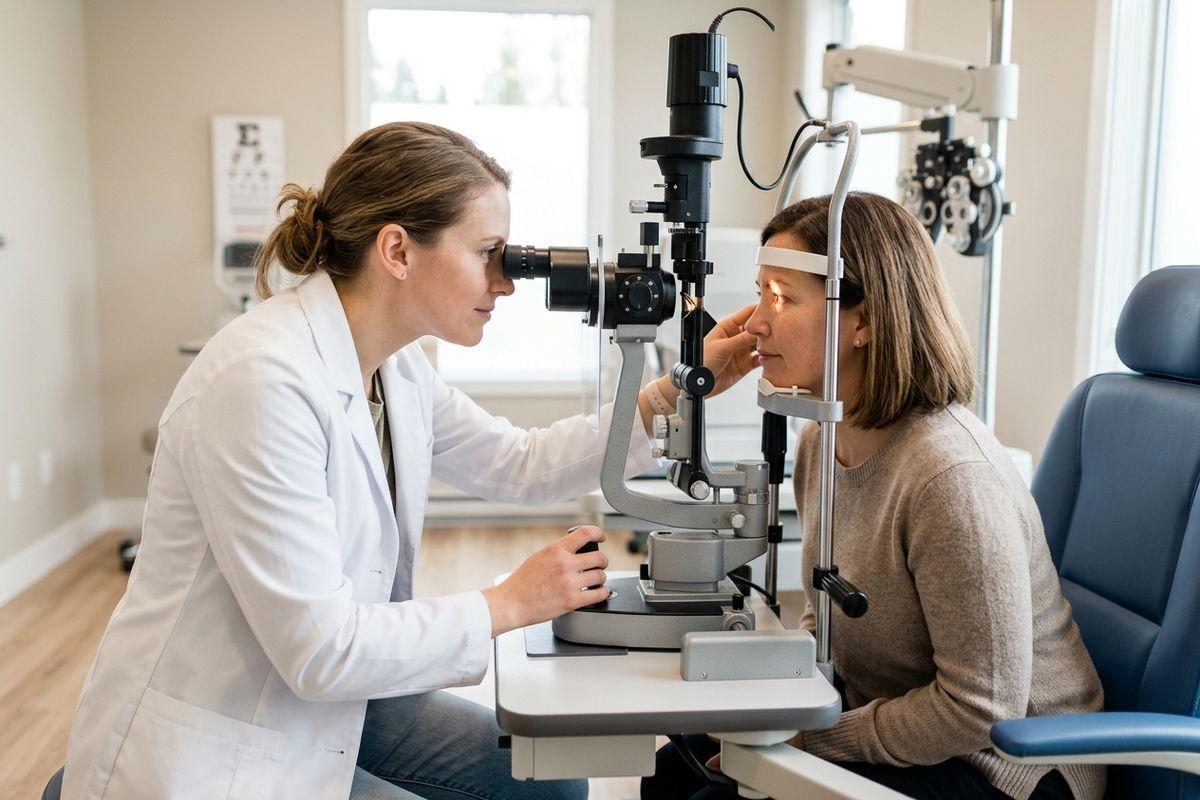
During an eye exam, modern imaging tools like the Spectralis OCT give a detailed view of the surface and structures of your eye. That helps your optometrist pinpoint the cause instead of guessing, so your care fits what’s actually going on.
We Can Help
Our team at Port Moody Eye Care Centre can help you find the source and a plan for relief. Book an appointment at either location today and give your eyes the comfort they deserve.